
Designing Provisional Restorations While You Wait for Your Final Crown
Between the appointment where your tooth is prepared and the day you receive your final crown, you will usually wear a temporary one. It might seem like a minor detail, but a well-made provisional restoration protects the tooth, keeps the gum healthy, and helps maintain your ability to eat and speak normally.
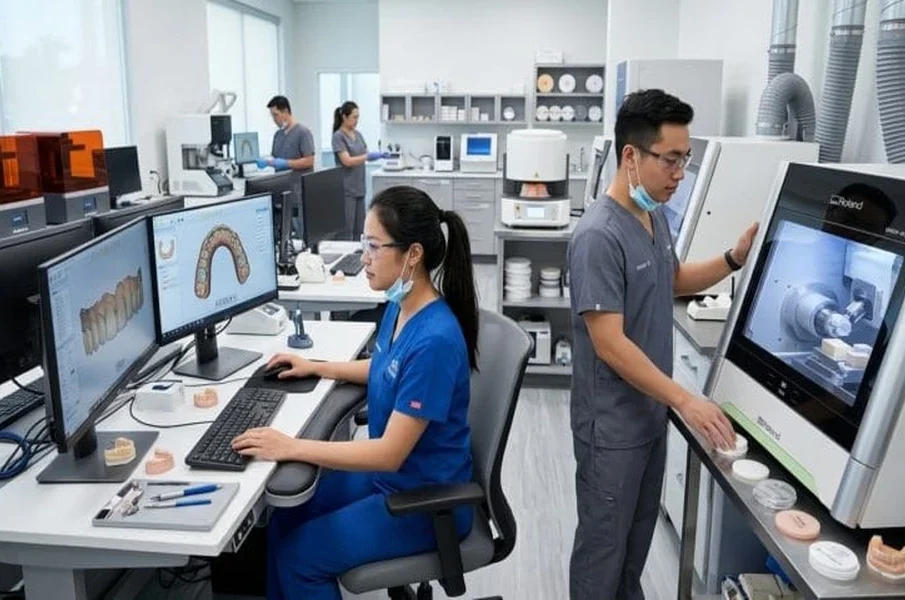
Temporary crowns used to be shaped by hand chairside, and quality varied. Today, many are designed digitally and either milled or printed, which allows a more consistent shape, fit, and bite. The provisional is designed from the same scan as the final restoration, so it follows the same overall shape.
That link is useful. A provisional acts as a trial run: you and your dentist can see how the shape looks and feels before the final version is made. If the length or the contour needs changing, the design can be adjusted for the permanent crown.
In more complex cases, such as several teeth or an implant, this stage is even more important. Practices often rely on a dental cad design service to prepare both the provisional and the final design at the same time, which keeps the two closely matched and saves clinical time.
Provisionals are not built to last, so a few precautions help. Avoid very sticky or hard foods, brush gently around the area, and floss carefully, pulling the floss out sideways rather than lifting it up.
If your temporary crown comes loose or breaks, contact your dentist promptly. The prepared tooth underneath is exposed and sensitive, and a quick repair protects both the tooth and the timing of your final fitting.






-
Understanding the Factors That Influence Healthy-Looking Skin
Healthy-looking skin can reflect a combination of internal conditions, everyday habits, environmental ... -
-
-
-