Is Spinal Decompression Necessary for Your Back Condition?
Key Takeaways
- Spinal decompression targets disc pressure rather than joint restriction.
- The therapy creates controlled negative pressure to reduce disc bulges and support healing.
- Manual adjustments and decompression serve different mechanical purposes in chiropractic treatment.
Introduction
Chiropractic treatment focuses on restoring movement and reducing pain, but not every back condition responds to the same method. Joint stiffness, postural strain, and muscle tension often improve with manual adjustments alone. Disc injuries behave differently. A herniated or bulging disc involves physical compression that limits space inside the spine. When nerve tissue becomes trapped, pain spreads beyond the back into the legs or arms. Spinal decompression exists to address this specific mechanical problem. Understanding when decompression becomes necessary depends on identifying the source of pressure rather than treating symptoms in isolation.
1. Why Disc Injuries Respond Differently
Spinal discs act as cushions between vertebrae. They absorb load and allow movement. Injury, prolonged compression, or age-related degeneration can cause a disc to flatten or bulge outward. When this bulge presses against a nerve root, the pain pattern changes. Patients report sharp leg pain, tingling, or weakness rather than local soreness.
Manual adjustments improve joint motion and spinal alignment. They do not directly change disc shape. Spinal decompression focuses on the disc itself. Controlled traction increases the space between vertebrae, reducing internal pressure. This shift encourages displaced disc material to retract while drawing fluid and nutrients back into the disc structure.
2. Symptoms That Point Toward Decompression
Certain symptoms suggest that disc pressure drives the pain rather than joint restriction. Radiating pain that follows a nerve pathway, such as pain travelling from the lower back into the calf or foot, signals nerve involvement. Persistent numbness or pins-and-needles sensations indicate compromised nerve signals.
Imaging findings also matter. An MRI showing disc herniation or protrusion confirms a structural issue. Patients who complete several weeks of manual chiropractic treatment or physiotherapy without relief often require a different mechanical approach. In these cases, decompression becomes a targeted response rather than an optional add-on.
3. How Decompression Differs from Traction
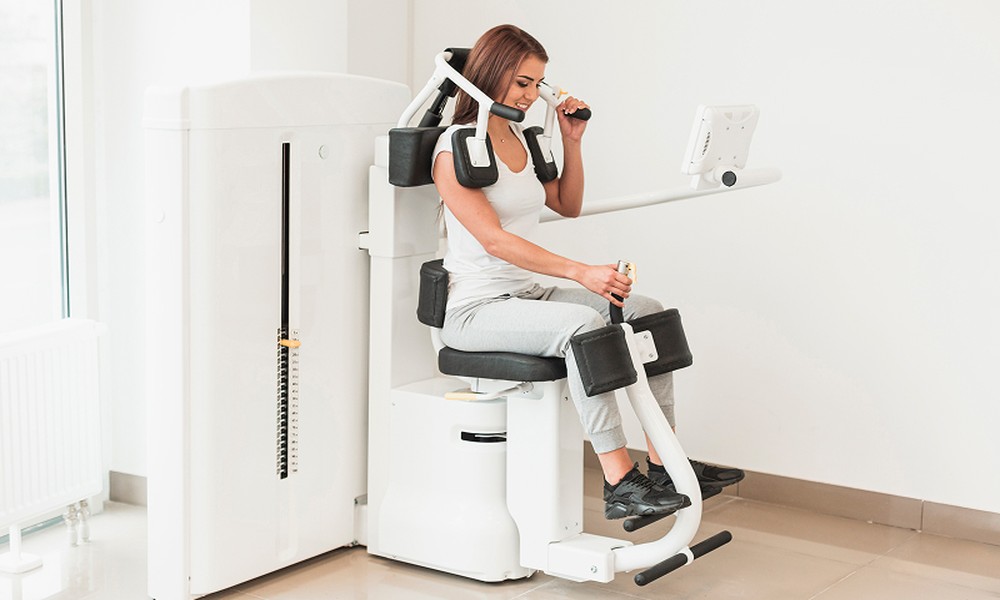
Older traction methods rely on constant pulling force. Muscles react defensively to sustained stretch by tightening. This reaction limits spinal separation and reduces treatment effectiveness. Modern spinal decompression systems work differently. Computerised tables apply tension in short, variable cycles. Sensors adjust force in response to muscle resistance.
This method prevents reflex contraction and permits gradual disc separation. The goal is not forceful stretching. The goal is controlled unloading that alters disc pressure without triggering muscle guarding. This precision makes decompression suitable for conditions where manual force cannot safely access the injured tissue.
4. Why Adjustments Alone May Stall Progress
Manual chiropractic adjustments restore motion between vertebrae. They improve spinal coordination and reduce joint fixation. When disc material compresses a nerve, joint movement alone does not remove the pressure source. Patients may feel temporary relief after adjustments, followed by recurring nerve pain.
Spinal decompression changes the environment inside the spine. Reduced pressure allows inflamed nerves to calm and improves circulation around damaged discs. Once decompression reduces nerve irritation, adjustments regain effectiveness by maintaining alignment and movement.
5. How Clinics Combine Decompression with Other Care
Clinics rarely rely on decompression as a standalone solution. Treatment plans usually combine several components. Manual adjustments maintain spinal mechanics after pressure reduction. Targeted rehabilitation strengthens core muscles that stabilise the spine during daily activity. Anti-inflammatory modalities support tissue recovery.
This combination addresses both cause and consequence. Decompression handles disc pressure. Adjustments manage joint movement. Rehabilitation prevents recurrence by improving load tolerance. Each component serves a distinct mechanical purpose within chiropractic treatment.
Conclusion
Spinal decompression becomes necessary when disc pressure, not joint stiffness, drives pain. Herniated discs and sciatica involve physical compression that manual techniques cannot fully resolve. Decompression creates the conditions required for disc recovery by reducing pressure and restoring internal disc hydration. When nerve symptoms persist despite standard chiropractic care, decompression often provides the missing mechanical correction. Correct diagnosis determines whether this therapy belongs in the treatment plan.
Contact TRUE Chiropractic to arrange a comprehensive spine assessment.




-
What Is Peyronie’s Disease and Why Do So Many Men Wait Too Long to Treat ...
Peyronie’s disease is one of the most consistently underreported conditions in men’s ... -
-
-